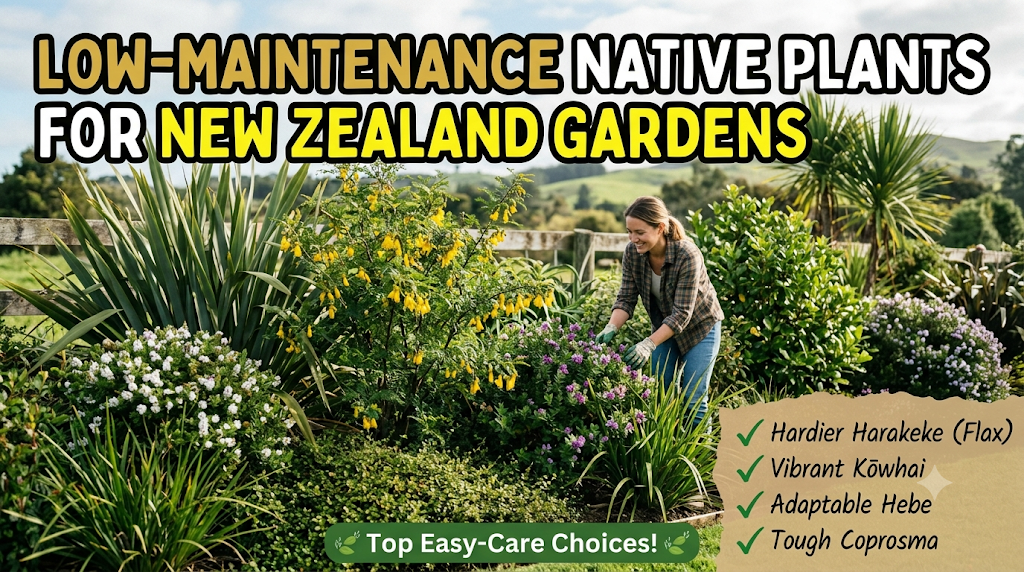
Choosing the right plants can make garden care much easier. Low-maintenance native plants for New Zealand gardens are often a practical choice because they can suit local conditions, provide year-round structure and support native birds and insects.
However, low-maintenance does not mean plant it and forget it. Every plant needs suitable light, soil, water and space. Young plants also require regular care while they establish. Once they are growing in the right location, many New Zealand natives can need less watering, feeding and pruning than plants that are poorly matched to the climate.
This guide explains which native plants to consider for different garden conditions, how to plan your planting and how to keep maintenance manageable.
Why Choose Native Plants for a New Zealand Garden?
Native plants can add texture, seasonal interest and a strong sense of place to a garden. They can also provide food or shelter for local wildlife when selected and planted appropriately.
Main benefits
| Benefit | What It Means for Gardeners |
|---|---|
| Adapted to local conditions | Many species can suit New Zealand’s soils and climate when planted in the right region |
| Lower water needs after establishment | Some natives tolerate dry periods once their root systems develop |
| Wildlife value | Flowers, foliage and shelter can support birds and insects |
| Year-round structure | Evergreen shrubs, grasses and flaxes provide lasting form |
| Fewer complicated plant combinations | A native planting scheme can look cohesive with a limited plant palette |
| Local character | Native planting reflects the landscape of Aotearoa |
The best results come from choosing plants that naturally suit your garden’s conditions. A coastal plant may struggle in heavy inland soil, while a dry-climate species may fail in a damp, shaded section.
How to Choose Low-Maintenance Native Plants
Before visiting a garden centre or native plant nursery, assess the area you want to plant.
Check these conditions
| Garden Condition | Question to Ask |
|---|---|
| Sunlight | Does the site receive full sun, partial shade or deep shade? |
| Soil | Is the soil clay-based, sandy, stony, fertile or compacted? |
| Drainage | Does rain disappear quickly or remain on the surface? |
| Wind | Is the area exposed to strong winds or sheltered by buildings? |
| Moisture | Will the plant receive regular rain or need irrigation? |
| Space | What height and width can the plant reach at maturity? |
| Region | Is the plant suitable for your local climate and conditions? |
Also consider how much pruning you are prepared to do. A fast-growing shrub may provide quick screening but require more regular trimming. A slower-growing plant may take longer to fill the space but need less routine shaping.
Best Low-Maintenance Native Plants for New Zealand Gardens
The following options suit different types of garden. Always check local growing advice and the mature size of a plant before purchasing.
1. Kōwhai
Kōwhai is valued for its bright yellow flowers and importance to native birdlife. Different kōwhai species and forms vary in size, so choose one that suits the available space.
Best for:
- Full sun
- Feature planting
- Bird-friendly gardens
- Larger containers or small trees, depending on the variety
Plant kōwhai in well-draining soil where it can receive good light. Young trees need watering while establishing, particularly during dry periods.
2. Mānuka
Mānuka is a hardy native shrub with small leaves and attractive flowers. It can suit informal planting, wildlife gardens and low-maintenance borders.
Best for:
- Sunny positions
- Free-draining soil
- Informal hedges
- Pollinator-friendly planting
Mānuka generally looks most natural when allowed to keep its relaxed form. Remove damaged or unwanted growth rather than repeatedly cutting the whole plant into a formal shape.
3. Pōhutukawa
Pōhutukawa is associated with coastal landscapes and produces striking red flowers. It can become a large tree, so it is not suitable for every small garden.
Best for:
- Coastal or warm gardens
- Large sections
- Feature planting
- Sheltered areas with room to grow
Before planting, check the mature height and spread. A pōhutukawa planted too close to a house, driveway or boundary can eventually require significant management.
4. Hebes
Hebes come in many shapes and sizes, from compact shrubs to taller varieties. Their flowers can add colour, while evergreen foliage provides structure outside the flowering period.
Best for:
- Mixed borders
- Containers
- Small gardens
- Coastal or exposed positions, depending on the variety
Select a hebe based on its mature size and local suitability. Some compact forms need little more than occasional removal of damaged or untidy growth.
5. Coprosma
Coprosmas are useful for hedges, screens, ground cover and mixed native planting. Their foliage can range from green to bronze, red or variegated, depending on the species and cultivar.
Best for:
- Informal hedges
- Sheltered coastal planting
- Containers
- Small gardens
- Layered borders
Avoid planting a large-growing coprosma in a narrow bed simply because it looks small in its nursery pot. Check the label and allow room for mature growth.
6. Carex
Native carex species are grass-like plants that provide movement and texture. They can be useful for softening paths, filling gaps between shrubs or creating a low-maintenance border.
Best for:
- Modern gardens
- Damp or moderately moist areas, depending on the species
- Mass planting
- Edges and containers
Carex testacea, often known for its warm copper tones, can suit sunny or partly shaded areas and may provide year-round interest. Do not assume all carex species have identical moisture requirements.
7. Rengarenga
Rengarenga, or New Zealand lily, forms clumps of strap-like leaves and produces light flowers. It can work well as an edging plant or as part of a low-maintenance coastal-style garden.
Best for:
- Part shade or filtered sun
- Edges and pathways
- Containers
- Sheltered coastal gardens
Remove old flower stems and damaged leaves when needed. Avoid allowing surrounding plants to overwhelm the clumps.
8. Harakeke
Harakeke, commonly known as New Zealand flax, provides strong architectural foliage and can suit larger gardens, damp areas and bold contemporary designs.
Best for:
- Feature planting
- Larger containers
- Damp or sunny areas, depending on the variety
- Bird-friendly gardens
Harakeke can become substantial. Choose a compact cultivar for smaller spaces and remove old leaves from the base when necessary. Do not plant large forms where they will block paths or windows.
9. Astelia
Astelia has broad, often silver-green foliage that creates a strong focal point. It can add contrast to darker shrubs and green ground cover.
Best for:
- Part shade
- Sheltered areas
- Contemporary gardens
- Large containers
Astelia generally performs best when protected from harsh conditions and given enough room for its leaves to spread.
10. Native grasses
Native grasses can provide movement, cover and texture without the constant mowing associated with lawns. Suitable choices vary by region and soil.
Best for:
- Informal borders
- Slopes
- Dry gardens
- Wildlife-friendly planting
- Replacing small areas of lawn
Choose grasses that suit the moisture and exposure of your site. Some need an annual tidy-up, while others can remain attractive through winter.
Native Plants for Dry, Sunny Gardens
If your garden receives strong sun and dries quickly, choose plants known to cope with free-draining conditions once established.
Options to consider include:
- Mānuka
- Compact hebes
- Suitable coprosmas
- Carex
- Native ground covers
- Some kōwhai varieties
- Drought-tolerant local shrubs
- Selected New Zealand grasses
Improve the soil before planting, but avoid creating a rich, moisture-retaining pocket around a plant that prefers lean, well-drained conditions.
Watering new plants
Even drought-tolerant natives need regular water during establishment. Water deeply around the root zone rather than giving the foliage a light spray. A layer of mulch can reduce evaporation, but keep it away from the plant stem.
Drought tolerance depends on the plant, soil, rainfall and local climate. A species that performs well in a dry Canterbury garden may need different care in a humid or exposed region.
Native Plants for Shady Gardens
Shaded gardens can still have plenty of texture and interest. Instead of forcing sun-loving plants to grow in poor light, use species that naturally tolerate shade or filtered sunlight.
Consider:
- Rengarenga
- Astelia
- Ferns
- Carex
- Heuchera
- Certain coprosmas
- Shade-tolerant ground covers
- Selected local forest-margin plants
Avoid overcrowding a shaded border. Good air movement helps reduce persistent dampness on foliage, particularly in areas with limited winter light.
Native Plants for Coastal Gardens
Coastal gardens face salt spray, wind, sandy soil and rapid moisture loss. Use plants suited to coastal exposure rather than assuming every native species will tolerate it.
Possible choices include:
- Coastal coprosmas
- Hebes suited to exposed sites
- Pōhutukawa where space allows
- New Zealand flax varieties
- Mānuka
- Coastal grasses
- Low-growing native ground covers
Plant new specimens during a suitable season and protect them from strong winds while they establish. A temporary shelter can help young plants develop stronger root systems.
Native Plants for Small Gardens
Small gardens need careful plant selection because even a low-maintenance shrub can become too large.
Good small-garden strategies
| Strategy | Why It Helps |
|---|---|
| Choose compact cultivars | Reduces future pruning |
| Use repeated plant groups | Creates a cohesive look |
| Combine shrubs and grasses | Adds texture without too many varieties |
| Use vertical climbers carefully | Adds height while preserving floor space |
| Plant in layers | Makes the garden feel fuller |
| Leave maintenance access | Makes pruning and weeding easier |
| Check mature dimensions | Prevents overcrowding |
Suitable options may include compact hebes, small coprosmas, carex, rengarenga and selected dwarf forms of larger native plants.
Do not choose a plant only because it is labelled dwarf. Check its mature size and whether it stays compact in your local conditions.
How to Create a Low-Maintenance Native Planting Scheme
A simple planting plan is usually easier to care for than a collection of unrelated plants.
Use three planting layers
- Ground layer: Low-growing plants, grasses or mulch
- Middle layer: Compact shrubs and flowering plants
- Upper layer: Small trees, taller shrubs or feature plants
Repeat the same few species in groups rather than planting one of everything. Repetition creates a more natural appearance and makes watering, pruning and replacing plants easier.
Leave room between plants
Planting too closely can create instant impact, but it often leads to competition, poor airflow and extra pruning. Follow the spacing recommendations on the plant label and consider the plant’s mature width.
How to Establish Native Plants Successfully
Good establishment is the foundation of a low-maintenance garden.
Prepare the site
Remove persistent weeds, loosen compacted soil and improve drainage where appropriate. Avoid disturbing the soil more than necessary.
Plant at a suitable time
Planting during cooler or wetter periods can reduce stress, but local conditions vary. Avoid planting during severe heat, drought or waterlogged conditions.
Water deeply
Give new plants enough water to reach the root zone. Gradually reduce irrigation as the plants establish, while monitoring them during dry weather.
Add mulch
Organic mulch can help reduce moisture loss and suppress some weeds. Keep mulch clear of the base of stems and trunks to reduce the risk of rot.
Protect young plants
Use stakes or temporary shelter where wind exposure is a problem. Remove supports when the plant is stable enough to stand independently.
Low-Maintenance Does Not Mean No Maintenance
Native plants still benefit from occasional care. A simple annual routine may include:
| Task | When to Consider It |
|---|---|
| Remove dead or damaged growth | Whenever it appears |
| Check for weeds | Throughout the growing season |
| Refresh mulch | When the layer becomes thin |
| Water during dry spells | Especially while plants are young |
| Inspect for pests | During regular garden checks |
| Prune lightly | According to the plant’s growth habit |
| Remove old flower stems | After flowering when needed |
| Check plant spacing | As the garden matures |
Avoid heavy pruning unless you know the plant responds well to it. Some natives can be damaged by cutting into old, leafless wood.
Avoid These Common Mistakes
Choosing plants only by appearance
A beautiful plant may not suit your soil, light or exposure. Always match the plant to the site.
Planting large natives in small spaces
Research mature size before planting trees and vigorous shrubs near buildings, paths or boundaries.
Overwatering established plants
Once suitable natives are established, frequent shallow watering may encourage weak surface roots. Water according to the plant and weather rather than following a fixed routine.
Using too many different species
A crowded mix can make maintenance difficult. Repeat a few plants to create structure.
Ignoring local plant provenance
Local or regionally suitable plants may perform better than species sourced from very different conditions. Ask a reputable nursery about origin and suitability.
Assuming all natives are pest-free
New Zealand native plants can still experience pests, disease or physical damage. Inspect plants regularly and choose healthy specimens.
How Native Plants Can Support Wildlife
Native gardens can provide food, shelter and nesting opportunities for birds and insects. To improve habitat:
- Include plants with different flowering periods.
- Retain dense foliage in selected areas.
- Provide shallow water safely.
- Avoid unnecessary pesticide use.
- Plant in groups rather than isolated specimens.
- Choose species suited to local wildlife.
- Keep a small area less formal if space allows.
A garden does not need to look untidy to support wildlife. Use a clear structure around a few more natural planting areas.
A Simple Native Garden Plan
For a small-to-medium garden, try this basic arrangement:
| Garden Area | Planting Idea |
|---|---|
| Back boundary | One small tree or taller shrub |
| Middle border | Hebes, coprosmas or other compact shrubs |
| Front edge | Carex, rengarenga or low ground cover |
| Sunny corner | Mānuka, grasses and flowering natives |
| Shaded corner | Astelia, ferns and shade-tolerant plants |
| Patio or entrance | Compact natives in large containers |
Adapt the plan to your region, soil and available light. The same combination will not suit every New Zealand garden.
Conclusion
The best low-maintenance native plants for New Zealand gardens are not simply the toughest plants available. They are the right plants for your soil, sunlight, rainfall, wind exposure and available space.
Choose a small number of suitable species, check their mature size and give new plants proper care while they establish. Kōwhai, mānuka, hebes, coprosmas, carex, rengarenga, astelia and selected native grasses can all add structure and character when matched to the right location.
Begin with one well-planned border or container display instead of changing the entire garden at once. With thoughtful plant selection and simple seasonal care, you can create a garden that looks attractive, supports local wildlife and remains manageable throughout the year.
Frequently Asked Questions
What are the best low-maintenance native plants for New Zealand gardens?
Good choices depend on your region and growing conditions, but options may include hebes, coprosmas, carex, mānuka, rengarenga, astelia, kōwhai and selected native grasses. Always check mature size and site suitability before planting.
Are New Zealand native plants easy to grow?
Many native plants are straightforward to grow when placed in suitable conditions. However, young plants need regular watering and protection while establishing. Poor drainage, excessive shade or strong wind can still cause problems.
Which native plants are suitable for a small garden?
Compact hebes, smaller coprosmas, carex, rengarenga and selected dwarf cultivars may suit small gardens. Check the mature height and width rather than relying only on the plant’s size in a nursery pot.
Which native plants tolerate dry conditions?
Some mānuka, hebes, coprosmas, carex and native grasses can tolerate dry conditions once established. Drought tolerance varies by species and region, so prepare the soil and water new plants carefully.
What native plants are good for shaded areas?
Rengarenga, astelia, ferns, carex and selected shade-tolerant shrubs can suit shaded or filtered-light areas. The soil moisture level is also important because shade beneath trees can sometimes be surprisingly dry.
Do native plants need fertiliser?
Not always. Many native plants perform well in suitable soil with limited feeding. If fertiliser is necessary, use a product appropriate for the plant and follow the label instructions. Avoid excessive feeding.
When should I plant native plants in New Zealand?
Planting time depends on the region, plant and weather. Cooler periods with adequate soil moisture can reduce stress, but avoid planting during severe heat, drought or waterlogged conditions. Ask a local nursery for seasonal advice.
How often should I water new native plants?
Watering needs depend on rainfall, soil and plant size. Water deeply around the root zone while plants establish, then reduce frequency as they develop stronger roots. Monitor them during dry or windy weather.