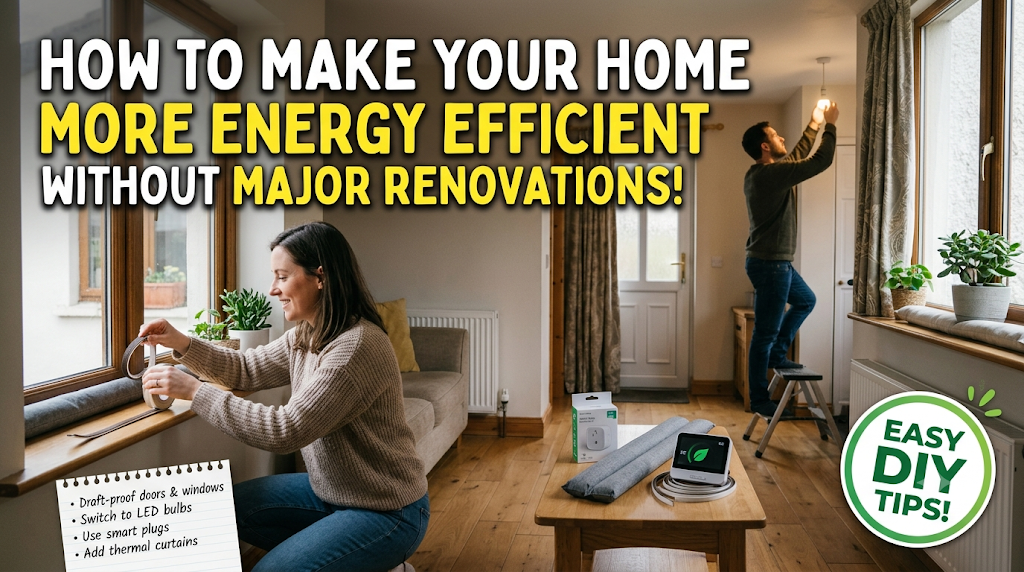
You do not need to replace your windows, install solar panels or rebuild your home to reduce energy use. Many of the most effective improvements are smaller changes that help prevent heat loss, control heating, reduce wasted electricity and improve everyday habits.
Learning how to make your home more energy efficient can also make rooms feel more comfortable. A warmer home in winter, a cooler space in summer and lower energy waste all begin with simple improvements.
The best approach is to start with low-cost changes, monitor the results and then consider larger upgrades only when they make sense for your property. Here are practical ways to improve your home without major renovations.
1. Find Where Your Home Is Losing Energy
Before buying new equipment, identify where energy is being wasted. Heating may be escaping through gaps around doors and windows, while appliances may be using electricity when nobody is using them.
Walk through each room and check:
- Draughts around doors and windows
- Gaps around pipes and cables
- Cold areas near external walls
- Radiators blocked by furniture
- Lights left on unnecessarily
- Appliances running on standby
- Hot-water pipes that feel uninsulated
- Rooms that are heated when they are rarely used
You can also review your energy bills or smart-meter information to look for unusual increases in consumption. If your usage is consistently high, a professional home energy assessment may help identify problems that are not obvious.
Make a simple priority list
Divide improvements into three categories:
- Free changes: Adjust habits and heating schedules.
- Low-cost changes: Add draught excluders, LED bulbs or smart plugs.
- Larger improvements: Consider insulation, efficient heating systems or renewable energy later.
This prevents you from spending money on upgrades before addressing simple sources of waste.
2. Seal Draughts Around Doors and Windows
Draught-proofing is one of the easiest ways to make your home more energy efficient. Small gaps allow heated air to escape and cold air to enter, making your heating system work harder.
Check for gaps around:
- External doors
- Window frames
- Letterboxes
- Loft hatches
- Floorboards
- Pipe openings
- Fireplace surrounds
- Garage doors
Affordable draught-proofing options
- Self-adhesive weather strips
- Brush strips for door bottoms
- Draught excluders
- Door curtains
- Sealant for suitable fixed gaps
- Letterbox covers
- Removable window film
Choose a product suitable for the gap and surface. A poorly fitted strip may not seal properly, while an oversized seal can prevent doors or windows from closing.
Do not block ventilation grilles, airbricks or purpose-built vents. Homes need controlled airflow to manage moisture and maintain indoor air quality. Never seal vents connected to fuel-burning appliances unless a qualified professional confirms that it is safe.
3. Use Curtains and Blinds More Effectively
Window coverings can help reduce heat loss when used properly. Close curtains or blinds after sunset during cold weather, and open them during sunny periods if natural warmth can enter the room.
For better results:
- Use lined curtains in colder rooms.
- Choose curtains that fit close to the window.
- Avoid covering radiators with long curtains.
- Keep blinds open during bright winter days.
- Close south-facing curtains during very hot summer afternoons.
- Use thermal or insulated curtains where appropriate.
Curtains should not block heating from circulating into the room. If a radiator is positioned below a window, choose a curtain length that allows warm air to move into the space.
4. Improve Your Heating Controls
Heating is often one of the biggest sources of household energy use. You can improve efficiency without replacing the entire heating system by using controls more thoughtfully.
Useful options include:
- A programmable thermostat
- Separate heating zones
- Timers for hot water
- Thermostatic radiator valves
- A smart thermostat
- Room-by-room temperature settings
Set heating schedules around your routine rather than keeping the system on continuously when nobody is home. If your home becomes cold quickly, experiment with shorter heating periods and moderate settings instead of making large changes all at once.
Avoid heating empty rooms
Close doors to rooms that do not need to be heated, but do not allow unused areas to become damp or excessively cold. In rooms with plumbing, maintain enough warmth to reduce the risk of condensation or frozen pipes during very cold weather.
Keep thermostats away from direct sunlight, draughts, radiators and large appliances. A poor location can cause inaccurate readings.
5. Keep Radiators Clear
Furniture, curtains and decorative covers can prevent heat from spreading around a room.
Improve radiator performance by:
- Moving sofas and cabinets away from radiators
- Keeping curtains clear of the top and front
- Dusting radiator surfaces
- Bleeding radiators when appropriate
- Checking that thermostatic valves work correctly
- Using reflective panels behind radiators on suitable external walls
Radiator reflector panels may be useful behind radiators mounted on uninsulated external walls. Follow the product instructions and avoid placing materials where they could create a safety risk.
If one radiator remains cold at the top or bottom, the cause may be air, sludge or a system problem. Ask a qualified heating professional if basic maintenance does not solve it.
6. Reduce Hot-Water Waste
Heating water uses energy every day. Small changes to showering, washing and hot-water controls can reduce unnecessary consumption.
Try these habits:
- Take shorter showers.
- Avoid leaving hot taps running.
- Repair dripping taps.
- Use a water-efficient showerhead where suitable.
- Wash clothes at lower temperatures when the fabric allows.
- Run dishwashers and washing machines with full loads.
- Set hot-water schedules around household routines.
- Insulate accessible hot-water pipes if appropriate.
Do not make unsafe changes to a boiler, immersion heater or hot-water cylinder. Temperature settings and maintenance should follow the manufacturer’s guidance. If you are unsure, consult a qualified professional.
7. Switch to LED Lighting
LED bulbs use less electricity than older incandescent or halogen bulbs and usually last longer. Replacing bulbs can be a simple way to make your home more energy efficient without changing fixtures or rewiring.
Start with lights that:
- Stay on for several hours each day
- Are difficult to reach
- Use high-wattage bulbs
- Illuminate outdoor areas
- Are frequently left on by mistake
Choose the correct:
- Bulb fitting
- Brightness
- Colour temperature
- Dimmability
- Indoor or outdoor rating
Warm-white bulbs often create a comfortable atmosphere in living spaces, while cooler light may suit work areas. Turn lights off when rooms are unoccupied, but use timers or sensors where they genuinely help.
8. Eliminate Standby Power
Many electronics continue using a small amount of electricity while plugged in, even when they appear to be switched off. The amount varies by device, but unnecessary standby use can add up across a household.
Good candidates for switching off include:
- Televisions
- Game consoles
- Speakers
- Desktop computers
- Printers
- Chargers
- Media equipment
- Kitchen appliances with display panels
Use a power strip with a switch for groups of devices, such as a television and its connected equipment. Smart plugs can help automate schedules, but do not use them with appliances that must remain powered for safety, security or essential functions.
Check the manufacturer’s instructions before disconnecting equipment that stores settings or needs to remain active.
9. Use Appliances More Efficiently
You do not need to replace every appliance immediately. Better settings and maintenance can help existing appliances use less energy.
Washing machine
- Wash full loads where practical.
- Use eco settings when suitable.
- Choose cooler cycles for lightly soiled clothes.
- Avoid unnecessary pre-washing.
- Clean the filter regularly.
Dishwasher
- Run full loads.
- Scrape rather than heavily rinsing dishes when the machine allows it.
- Use an eco programme.
- Keep filters clean.
- Avoid opening the door repeatedly during a cycle.
Refrigerator and freezer
- Keep door seals clean and intact.
- Avoid placing hot food inside.
- Leave space for air circulation.
- Defrost models that require manual defrosting.
- Do not keep the temperature colder than necessary.
- Check that the appliance is not positioned beside a heat source.
Oven and hob
- Match pans to the burner size.
- Use lids when cooking.
- Avoid opening the oven unnecessarily.
- Cook multiple dishes together when practical.
- Use a microwave, toaster oven or air fryer for small portions if appropriate.
Energy use varies between appliance types and models, so focus first on appliances used frequently or for long periods.
10. Improve Loft, Attic and Accessible Insulation
Heat rises, so an uninsulated or poorly insulated loft can contribute to heat loss. Adding or improving insulation may not involve major living-space renovation, but it should be planned carefully.
Before adding insulation:
- Check for roof leaks.
- Keep ventilation routes clear.
- Protect water tanks and pipes where necessary.
- Avoid compressing insulation.
- Do not cover electrical fittings unless the product and installation allow it.
- Maintain safe access around equipment.
- Follow local building and fire-safety guidance.
If you are unsure about the condition of existing insulation, ask a qualified assessor or installer to inspect it. Insulation is most effective when combined with suitable ventilation and moisture control.
11. Use Smart Plugs and Energy Monitors
Energy monitors can show which devices use the most electricity. This helps you focus on real sources of consumption rather than guessing.
A smart plug may be useful for:
- Entertainment systems
- Desk equipment
- Decorative lighting
- Chargers
- Small appliances used on a schedule
Avoid placing smart plugs on appliances with high starting loads unless the product is specifically rated for that use. Do not use them as a substitute for proper electrical advice.
Track consumption before and after a change. For example, you might compare a week of leaving a home office setup connected with a week of switching it off completely at night.
12. Make Better Use of Natural Light
Natural light can reduce the need for artificial lighting during the day.
To increase daylight:
- Keep windows clean.
- Trim plants that block light.
- Use light-coloured walls and ceilings.
- Position desks near windows where practical.
- Avoid placing tall furniture directly in front of windows.
- Use mirrors carefully to reflect daylight.
Do not remove useful privacy features or create excessive summer heat just to increase daylight. Balance light, comfort and ventilation.
13. Manage Summer Heat Without Heavy Air Conditioning
Energy efficiency is not only about staying warm in winter. Keeping a home cooler during hot weather can also reduce electricity use.
Try:
- Closing blinds during the hottest part of the day.
- Opening windows when outdoor air is cooler.
- Creating cross-ventilation where safe.
- Using a fan instead of air conditioning when appropriate.
- Avoiding heat-producing appliances during the hottest hours.
- Cooking outdoors or using smaller appliances where practical.
Use fans sensibly. They cool people rather than lowering the room temperature, so switch them off when the space is empty.
If you use air conditioning, keep filters clean, close doors and windows while it operates, and use a timer rather than running it continuously.
14. Dry Clothes Efficiently
Tumble dryers can use considerable electricity, especially when clothes enter the machine very wet.
Reduce drying energy by:
- Using a higher spin speed when suitable.
- Drying clothes outdoors when conditions allow.
- Using an indoor drying rack in a well-ventilated room.
- Cleaning the dryer filter.
- Avoiding overloading the machine.
- Separating heavy and lightweight items.
- Using a moisture-sensor programme if available.
Do not dry clothes in a room with poor ventilation if this causes condensation or mould. Open a window or use suitable extraction while indoor drying takes place.
15. Control Moisture and Ventilation
A more airtight home can retain heat, but it still needs adequate ventilation. Moisture from cooking, bathing, drying clothes and breathing can lead to condensation if it is not removed.
Good habits include:
- Use extractor fans while cooking and bathing.
- Keep bathroom doors closed during showers.
- Ventilate kitchens and bathrooms effectively.
- Dry condensation from windows.
- Avoid blocking air vents.
- Maintain ventilation systems.
- Keep furniture slightly away from cold external walls where possible.
If you notice persistent mould, damp patches or musty smells, investigate the cause instead of simply painting over the surface. A building professional may be needed to identify leaks, inadequate ventilation or insulation problems.
16. Maintain Heating and Cooling Equipment
Poorly maintained equipment may work harder than necessary. Follow the manufacturer’s maintenance instructions and arrange professional servicing where required.
Useful maintenance tasks include:
- Replacing or cleaning filters
- Removing dust from vents
- Checking thermostat operation
- Keeping outdoor heat-pump units clear
- Inspecting boiler or heating-system controls
- Cleaning refrigerator coils where accessible
- Checking ductwork for visible damage
Do not attempt gas, electrical or refrigerant repairs yourself. Use a suitably qualified professional for safety-critical work.
17. Consider Renewable Energy Later
Solar panels, heat pumps and other renewable technologies can improve long-term efficiency, but they may require more planning and investment than the changes above.
Before making a major purchase:
- Improve draught-proofing and insulation where appropriate.
- Review your current energy use.
- Check whether the property is suitable.
- Compare installation, maintenance and running costs.
- Request more than one professional assessment.
- Check current grants or incentives through official sources.
- Review warranties and expected maintenance.
Renewable energy is not automatically the first step for every home. Reducing waste and improving the building’s performance can make later technology upgrades more effective.
The Best Order for Energy-Efficient Improvements
If your budget is limited, use this order:
Start with free actions
- Turn off unused lights.
- Adjust heating schedules.
- Close curtains at appropriate times.
- Avoid washing half-loads.
- Switch off unnecessary standby devices.
- Use natural ventilation when conditions allow.
Add low-cost improvements
- Draught excluders
- Window seals
- LED bulbs
- Smart plugs
- Thermal curtains
- Radiator reflector panels
- Pipe insulation where suitable
Plan larger upgrades carefully
- Loft insulation
- Heating controls
- Window improvements
- Heating-system replacement
- Solar panels
- Renewable heating
This staged approach can help you make your home more energy efficient without taking on unnecessary costs.
Common Mistakes to Avoid
Sealing every vent
Draught-proofing should not remove necessary ventilation. Blocked vents can create moisture and safety problems.
Buying gadgets without measuring usage
A smart device is not automatically an energy-saving device. Check whether it solves a real problem in your home.
Ignoring heating controls
Replacing bulbs while leaving heating on in empty rooms may overlook a larger source of energy use.
Choosing cheap insulation without checking suitability
Incorrectly installed insulation can create moisture, fire or ventilation issues. Follow product and local building guidance.
Assuming lower temperature is always better
Comfort and health matter. Make gradual changes and ensure rooms remain suitable for the people using them.
Relying on general savings estimates
Energy costs and potential savings vary by home size, climate, energy prices, equipment and behaviour. Treat online savings figures as general examples, not guarantees.
A Practical Seven-Day Energy-Efficiency Plan
Day 1: Check for draughts
Inspect doors, windows and visible gaps. Note the easiest areas to seal.
Day 2: Review heating
Adjust schedules and check whether rooms are being heated unnecessarily.
Day 3: Replace frequently used bulbs
Start with the lights that stay on longest.
Day 4: Switch off standby devices
Group entertainment or office equipment on labelled power strips.
Day 5: Improve hot-water habits
Shorten showers, repair dripping taps and run appliances with full loads.
Day 6: Check insulation and ventilation
Inspect the loft hatch, accessible pipework and ventilation routes without disturbing hazardous materials.
Day 7: Review your results
Compare your energy use, comfort and routine. Decide which improvement should come next.
Conclusion
Learning how to make your home more energy efficient does not require major renovations or expensive technology. Start by reducing draughts, improving heating control, switching to LED lighting, limiting standby power and using appliances more carefully.
Then review insulation, ventilation and equipment maintenance. These changes can improve comfort while reducing unnecessary energy use. If you later consider larger upgrades, begin with a clear understanding of your home’s actual needs.
The most effective plan is practical and gradual: find the biggest sources of waste, make affordable changes first and measure what improves.
Frequently Asked Questions
What is the easiest way to make your home more energy efficient?
Start with draught-proofing, heating schedules, LED bulbs and switching off unused appliances. These changes are relatively simple and do not require major building work.
Does turning down the thermostat save energy?
Using less heating generally reduces energy demand, but the appropriate setting depends on your home, climate, health needs and comfort. Make gradual adjustments and use programmable controls to avoid heating empty rooms.
Are smart plugs worth using?
Smart plugs can help reduce standby use and automate schedules for suitable devices. They are most useful when connected equipment is frequently left on unnecessarily. Choose products with the correct electrical rating.
How can I reduce energy use without replacing appliances?
Use eco programmes, run full loads, maintain filters and seals, avoid unnecessary preheating and switch appliances off when they are not needed. These habits can improve efficiency without immediate replacement.
Does draught-proofing cause damp?
Draught-proofing itself does not have to cause damp when completed correctly. Problems can arise if necessary ventilation is blocked or moisture is not removed. Keep vents clear and use extractor fans in kitchens and bathrooms.
Are energy-efficient light bulbs worth it?
LED bulbs generally use less electricity than older types and can last longer. Start by replacing bulbs used most often, while checking the fitting, brightness and dimmer compatibility.
Should I improve insulation before installing solar panels?
There is no universal answer, but reducing heat loss and understanding your energy use can help you choose later upgrades more effectively. Consider professional advice and current local schemes before investing.
How do I know which home energy improvement to do first?
Begin with an inspection of draughts, heating controls, insulation, hot-water use and standby equipment. Prioritise changes that address the largest source of waste within your budget.