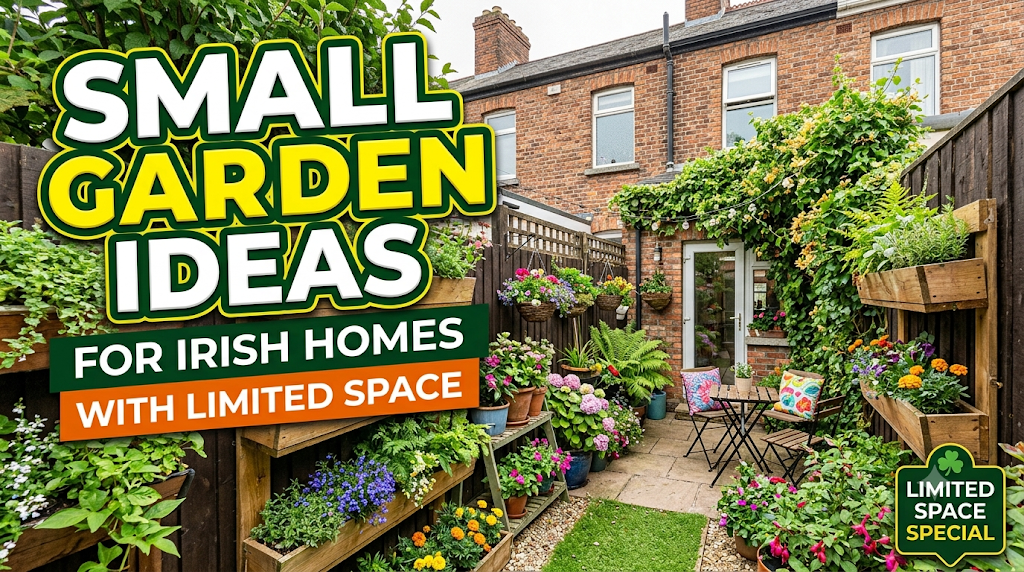
Limited outdoor space does not mean you have to give up on having a beautiful garden. With the right layout, planting choices and storage solutions, even a narrow yard, small patio, balcony or compact front garden can become a useful and inviting outdoor space.
The best small garden ideas for Irish homes work with the local conditions instead of fighting them. Ireland’s changeable weather, rainfall, wind and mixture of sunny and shaded gardens all influence which plants and materials will perform well.
Whether you want a place to sit, grow herbs, attract pollinators or simply add colour to your home, these practical ideas can help you make better use of every metre.
1. Start With a Simple Small-Garden Plan
Before buying plants or furniture, measure the space and note how it changes throughout the day.
Record the following details:
| What to Check | Why It Matters |
|---|---|
| Length and width | Helps you choose furniture, planters and paving |
| Sunlight | Shows where sun-loving or shade-tolerant plants will grow |
| Wind exposure | Helps you select sturdy plants and secure containers |
| Drainage | Prevents waterlogging and root problems |
| Access points | Ensures bins, bikes and tools remain easy to reach |
| Existing walls and fences | Identifies opportunities for climbers and vertical planting |
Notice where water collects after rain. Also check whether neighbouring buildings, walls or mature trees create shade.
A small garden usually looks better when it has one clear purpose. For example, you could create:
- A dining and seating area
- A compact kitchen garden
- A wildlife-friendly planting space
- A low-maintenance courtyard
- A combination of seating, storage and containers
Trying to include every feature can make the space feel crowded. Choose your priorities first, then design around them.
2. Use Vertical Space
When floor space is limited, look upwards. Walls, fences and railings can provide valuable growing space without reducing the area available for walking or seating.
Useful vertical options include:
| Vertical Feature | Suitable Uses |
|---|---|
| Trellis | Climbing roses, honeysuckle and clematis |
| Wall-mounted pots | Herbs, flowers and trailing plants |
| Hanging baskets | Seasonal colour near doors or windows |
| Tiered shelves | Small pots and gardening supplies |
| Narrow obelisks | Climbers in a border or large container |
| Living wall pockets | Herbs, salad leaves and ornamental plants |
Choose secure fixings, especially in exposed or windy areas. Containers mounted to walls or fences should be light enough to avoid placing unnecessary pressure on the structure.
Climbing plants can also soften hard surfaces and add privacy. However, check the mature size of each plant before planting it near gutters, windows or neighbouring boundaries.
3. Create a Container Garden
Containers are among the most flexible small garden ideas for Irish homes. They allow you to grow plants on patios, balconies, doorsteps and paved yards.
You can move containers when you need more space, change plants by season or improve drainage by raising pots slightly off the ground.
Plants for containers
Consider a mixture of ornamental, edible and wildlife-friendly plants.
| Plant Group | Examples |
|---|---|
| Herbs | Thyme, sage, mint, chives and parsley |
| Flowers | Geraniums, violas, calendula and marigolds |
| Edible crops | Lettuce, rocket, strawberries and dwarf tomatoes |
| Shade plants | Ferns, heucheras and hostas |
| Evergreen plants | Compact grasses, skimmia and small hebes |
| Pollinator plants | Lavender, foxglove, catmint and native flowering plants |
Use pots with drainage holes and choose peat-free compost where possible. Place saucers beneath containers on balconies or paved areas, but avoid allowing pots to remain permanently waterlogged.
A large container often needs less frequent watering than several very small pots. Grouping pots together can also create a stronger visual display.
4. Choose Plants for Irish Conditions
The right plants can make a compact garden easier to maintain. Select plants according to light, soil, wind and moisture rather than choosing only by appearance.
For sunny spaces
Sunny areas may suit:
- Lavender
- Thyme
- Rosemary in a sheltered position
- Sedums
- Ornamental grasses
- Achillea
- Marigolds
- Compact fruit plants
For shaded spaces
Many Irish gardens have shaded corners created by walls, fences or nearby buildings. Suitable options may include:
- Ferns
- Foxgloves
- Heucheras
- Hellebores
- Hostas
- Astrantia
- Brunnera
- Ivy used carefully as a climber or ground cover
Always check the final size and moisture requirements of a plant. A shade-loving plant may still struggle in very dry soil beneath a tree, while a moisture-loving plant may fail in a container that dries quickly.
5. Add a Compact Raised Bed
A raised bed can make a small garden feel organised and productive. It provides a defined growing area for vegetables, herbs, flowers or a mixture of all three.
A narrow raised bed along a wall or boundary can use space efficiently while leaving a clear central path. If the bed is accessible from both sides, keep it narrow enough to reach the middle without stepping on the soil.
Good compact crops include:
| Crop | Why It Works in a Small Garden |
|---|---|
| Salad leaves | Grow quickly and can be harvested gradually |
| Radishes | Need little space and mature relatively quickly |
| Chives | Useful, attractive and perennial |
| Strawberries | Grow well in containers or raised beds |
| Dwarf beans | Produce crops vertically |
| Peas | Can climb a support |
| Herbs | Provide useful harvests from a small area |
Succession planting allows you to use the same space more than once. For example, you can grow salad leaves early in the season and replace them with another crop later.
6. Use Built-In Seating
Bulky garden furniture can overwhelm a small space. Built-in or multifunctional seating is often more practical.
Consider:
- A bench fixed along a boundary wall
- A storage bench for cushions and tools
- Foldable chairs that can be stored indoors
- A narrow bistro table
- A bench built into a raised planter
- Stackable stools for occasional guests
Keep the main walking route clear. Position seating where you can enjoy sunlight, a view of the plants or shelter from prevailing wind.
A small outdoor rug, cushions and warm lighting can make the area feel comfortable without adding permanent structures.
7. Use Mirrors and Light Colours Carefully
A well-placed mirror can reflect light and make a small garden appear deeper. Use outdoor-rated mirrors and position them so they reflect plants, sky or an attractive view rather than a blank wall.
Light-coloured paving, rendered walls and pale gravel can also make a compact area feel brighter. However, avoid using too many contrasting colours or materials. A simple palette usually creates a more spacious appearance.
Good combinations include:
- Natural timber with green planting
- Pale stone with silver foliage
- Dark fencing with light flowers
- Brick walls with soft perennial planting
- Grey paving with herbs and ornamental grasses
Do not place a mirror where it could confuse birds or create uncomfortable glare for neighbours.
8. Design a Small Garden With One Strong Focal Point
A focal point gives the eye somewhere to rest. In a small garden, one strong feature is usually more effective than several competing decorations.
Possible focal points include:
- A small tree
- A sculptural planter
- A water bowl
- A colourful front door
- A distinctive bench
- A trellis covered with climbers
- A decorative pot
- A well-designed raised bed
A compact multi-stem tree can provide height without taking up the same space as a large spreading tree. Before planting, check its mature size, root behaviour and suitability for the soil.
9. Make Privacy Screening Work Harder
Small gardens often need privacy from nearby windows, roads or adjoining properties. Instead of installing a tall solid screen everywhere, combine planting with lightweight structures.
Options include:
| Privacy Solution | Best Use |
|---|---|
| Slatted timber screen | Adds privacy while allowing some light through |
| Trellis | Supports climbing plants |
| Tall containers | Creates flexible screening |
| Evergreen shrubs | Provides year-round structure |
| Pleached or trained plants | Adds height in a controlled form |
| Outdoor curtain | Useful for temporary patio privacy |
Choose screening that matches the scale of the garden. A very tall, solid fence can make a small space feel enclosed and dark.
Evergreen planting can provide year-round interest, but avoid planting large shrubs too close to walls or foundations. Regular pruning is important in a limited space.
10. Create a Small Wildlife-Friendly Garden
You do not need a large lawn or pond to support wildlife. A few thoughtful features can make a compact garden more welcoming to pollinators and other beneficial creatures.
Try adding:
- Flowers that provide nectar across different seasons
- A shallow dish of clean water
- A small log pile
- Native or locally suitable plants
- Dense foliage for shelter
- A small area of undisturbed leaves
- A bee hotel positioned in a dry, sunny location
The All-Ireland Pollinator Plan provides planting guidance for gardens and encourages practical actions that support pollinators. Choose flowers with different shapes and flowering periods to provide a longer supply of food.
Avoid using pesticides unnecessarily. Also, keep water features shallow and clean so they are safer for insects and small animals.
11. Use Rainwater Wisely
Rain is a natural part of gardening in Ireland, but compact spaces can still suffer from poor drainage or containers that dry out during sunny periods.
Useful water-management ideas include:
- Add a water butt to collect roof runoff.
- Use pots with drainage holes.
- Raise containers slightly from the ground.
- Choose permeable paving where practical.
- Add organic matter to improve soil structure.
- Group containers according to watering needs.
- Use mulch to reduce moisture loss.
A small rain garden or planted drainage area may work in some gardens, but it needs proper planning. Avoid directing water toward foundations or neighbouring properties.
Choose plants that suit the existing moisture level. Do not automatically add more water to a garden that already has heavy, poorly draining soil.
12. Try a Low-Maintenance Garden Layout
A low-maintenance design can still look full and attractive. The key is to reduce unnecessary lawn, use dependable plants and keep the layout simple.
Consider replacing a difficult patch of grass with:
- Paving and container planting
- Gravel with stepping stones
- A compact raised bed
- Low-growing ground cover
- A small seating area
- A mixed border of shrubs and perennials
If you keep a lawn, use a simple shape that is easy to mow. Curved edges can look attractive, but complicated shapes create extra trimming work.
Choose plants with different heights:
- Low ground cover at the front
- Medium-height perennials in the centre
- Taller or climbing plants at the back
This layered approach makes a small garden appear deeper while helping you use vertical space.
13. Improve a Small Front Garden
A front garden can make a strong first impression without needing extensive planting.
Practical small front garden ideas include:
- A narrow border beside the path
- A pair of matching containers
- A compact evergreen shrub
- Permeable gravel or paving
- A climber around the doorway
- Seasonal bulbs in pots
- A clearly defined path
- A small wall-mounted planter
Keep bins, bicycles and access routes in mind when planning the layout. A beautiful front garden still needs to remain practical for everyday use.
If changing a front garden involves major paving, drainage or boundary work, check local planning and property requirements before starting.
14. Use Lighting to Extend the Space
Outdoor lighting can make a small garden more useful in the evening and highlight attractive planting.
Suitable options include:
- Solar lights along a path
- Low-level lights near steps
- Wall lights beside a seating area
- String lights above a patio
- Small spotlights for a tree or feature wall
Use warm, subtle lighting rather than bright lights across the whole garden. Keep fixtures directed downward where possible and consider neighbours and wildlife.
Choose weather-resistant products and ensure outdoor electrical installations are completed safely.
15. Keep Storage Hidden and Organised
Garden tools, bins and children’s equipment can quickly make a small space look cluttered. Storage should be planned as part of the design rather than added at the end.
Space-saving options include:
| Storage Idea | Benefit |
|---|---|
| Narrow vertical shed | Uses height instead of valuable floor space |
| Wall hooks | Keeps tools off the ground |
| Storage bench | Combines seating and storage |
| Foldable furniture | Can be stored when not in use |
| Lidded deck box | Protects cushions and small tools |
| Hanging rail | Stores hand tools neatly |
Paint storage in a colour that blends with the fence or wall. This makes it less visually dominant.
Mistakes to Avoid in a Small Garden
Choosing too many plant varieties
A large collection of unrelated plants can make the garden look untidy. Repeat a few reliable plants for a more cohesive design.
Ignoring mature plant size
A small plant may eventually outgrow its container or border. Check its mature height and spread before buying.
Using containers without drainage
Waterlogged roots are a common cause of plant failure. Always check that excess water can escape.
Blocking the main path
Furniture and pots should not make it difficult to reach doors, bins or storage.
Creating too much shade
Tall fences, dense shrubs and large structures can reduce the light available to the entire garden.
Choosing high-maintenance materials
Glossy surfaces, delicate furniture and plants that require constant pruning may become difficult to manage. Select durable materials and dependable plants.
A Simple Small Garden Makeover Plan
If you are unsure where to begin, follow this practical sequence:
- Remove broken items and unnecessary clutter.
- Measure the space and observe sunlight.
- Decide on the garden’s main purpose.
- Mark out seating, storage and walking areas.
- Improve drainage and soil where necessary.
- Add one vertical feature or focal point.
- Choose a limited palette of plants.
- Add containers, raised beds or climbers.
- Install subtle lighting.
- Review the space after each season and adjust gradually.
This approach prevents expensive mistakes and gives you time to understand what works in your garden.
Conclusion
The best small garden ideas for Irish homes combine practical design with plants that suit local conditions. Use vertical space, select containers carefully, choose plants according to sunlight and drainage, and keep furniture and storage proportional to the area.
You do not need a large budget or a large garden to create an attractive outdoor retreat. Start with one clear purpose, make the most of walls and boundaries, and add features gradually. With thoughtful planning, even a narrow Irish garden can become a comfortable, productive and wildlife-friendly part of the home.
Frequently Asked Questions
What are the best small garden ideas for Irish homes?
The most useful ideas include container gardening, vertical planting, narrow raised beds, built-in seating, compact evergreen shrubs, climbers and layered planting. The best option depends on your garden’s sunlight, drainage and main purpose.
Which plants grow well in small Irish gardens?
Suitable plants may include ferns, heucheras, foxgloves, lavender, thyme, hostas, hellebores, compact grasses and pollinator-friendly flowering plants. Always select plants according to the amount of sun, wind and moisture in your garden.
How can I make a small garden look bigger?
Use a simple layout, light colours, clear pathways and vertical planting. A well-positioned mirror, consistent materials and one strong focal point can also create a greater sense of depth.
What can I grow in a small Irish garden?
You can grow herbs, salad leaves, strawberries, peas, dwarf beans, flowers and some compact fruit plants. Containers and raised beds make it easier to control soil quality and use limited space efficiently.
How do I create privacy in a small garden?
Use trellis, climbers, slatted screens, tall containers or carefully selected evergreen plants. Avoid enclosing the entire space with tall solid fencing, as this can reduce light and make the garden feel smaller.
Are small gardens difficult to maintain?
They do not have to be. Choose reliable plants, limit the number of varieties, replace difficult lawn areas with paving or planting, and use containers with suitable drainage. A simple layout usually needs less maintenance.
How can I attract pollinators to a small garden?
Plant flowers that provide nectar across different seasons, avoid unnecessary pesticides, add a shallow water source and include a mixture of plant shapes. Guidance from the All-Ireland Pollinator Plan can help you choose suitable planting.
Can I create a garden without a lawn?
Yes. A small garden can use paving, gravel, raised beds, containers, ground cover and seating instead of grass. This may create a more practical layout, especially where the lawn is difficult to mow or remains wet.