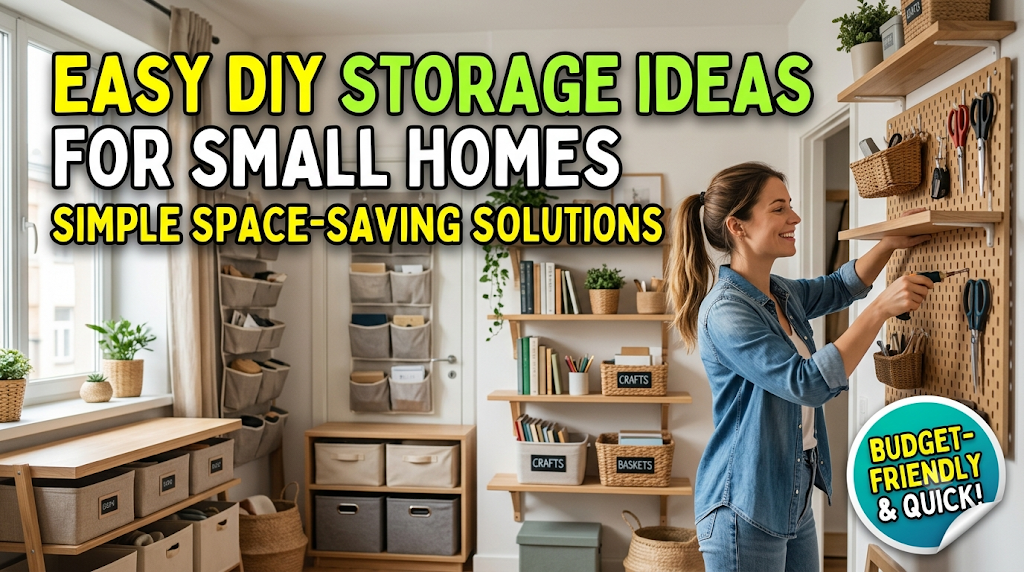
Small homes can feel crowded quickly, especially when everyday items do not have a proper place. Coats, shoes, kitchen equipment, books, cleaning supplies and seasonal belongings can take over valuable floor space.
The good news is that you do not always need a larger home or expensive fitted furniture. With a little planning, you can use walls, doors, unused corners and hidden spaces more effectively.
These DIY storage ideas for small homes are designed to be practical, affordable and easy to adapt. Many require only basic tools, while several options are suitable for renters if you use removable or freestanding solutions.
Start by Decluttering and Measuring
Before building shelves or buying storage boxes, decide what you actually need to store. Adding more storage will not solve the problem if unused items are taking up most of the space.
Sort belongings into four groups:
- Keep and use regularly
- Keep but store elsewhere
- Donate or sell
- Recycle or discard responsibly
Then measure the areas you want to improve. Record the width, height and depth available before purchasing materials or furniture.
Pay special attention to:
- Empty wall sections
- Space beneath beds
- The back of doors
- Corners beside furniture
- The top of wardrobes
- Gaps beside appliances
- Space beneath stairs
- The area above kitchen cabinets
A simple measurement can prevent a common mistake: buying storage that blocks doors, windows, walkways or heating equipment.
1. Build Simple Floating Shelves
Floating shelves are among the most useful DIY storage ideas for small homes because they use vertical wall space while keeping the floor clear.
You can install them in:
- Living rooms for books and décor
- Bedrooms for accessories
- Kitchens for jars and everyday utensils
- Bathrooms for towels and toiletries
- Hallways for keys and small baskets
How to make floating shelves work
- Use shelves that match the weight of the items.
- Choose suitable wall fixings for brick, plasterboard or masonry.
- Keep frequently used items within easy reach.
- Use baskets or boxes to prevent open shelves from looking untidy.
- Leave enough space around windows, doors and radiators.
For heavy books, tools or kitchen equipment, use proper brackets and fixings rather than relying on lightweight adhesive products.
If you rent your home, consider freestanding ladder shelves or removable shelving systems. Always check your tenancy agreement before drilling into walls.
2. Use the Space Behind Doors
The back of a door is often overlooked, but it can hold a surprising number of small items.
Add an over-the-door organiser for:
- Shoes
- Cleaning products
- Toiletries
- Hair accessories
- Snacks
- Craft supplies
- Small toys
- Wrapping paper
You can also attach hooks to the inside of a wardrobe or cupboard door. This works well for belts, scarves, measuring spoons, brushes and reusable shopping bags.
Check that the organiser does not prevent the door from closing properly. Avoid storing heavy items on lightweight door-mounted systems, especially if the hinges are not designed to carry additional weight.
3. Create Under-Bed Storage
The space beneath a bed is ideal for items you do not use every day. Instead of allowing this area to collect dust, turn it into organised storage.
Store:
- Seasonal clothing
- Spare bedding
- Shoes
- Luggage
- Holiday decorations
- Extra towels
- Memory boxes
Use shallow boxes with handles or attach castors to sturdy storage platforms so they can slide out easily. Label each box clearly to avoid searching through several containers.
For homes with limited bedroom storage, a bed with built-in drawers can also be useful. However, measure the clearance first to ensure drawers can open fully without hitting walls or furniture.
4. Make a DIY Pegboard Organiser
A pegboard can provide flexible storage in a kitchen, home office, craft room, utility area or garage.
Depending on the room, you can use it to hold:
- Scissors
- Cables
- Tools
- Cooking utensils
- Small baskets
- Office supplies
- Plant-care equipment
- Craft materials
The main advantage is flexibility. Hooks and shelves can be moved whenever your storage needs change.
Paint the pegboard to match the wall or leave it natural for a practical workshop look. Make sure it is securely mounted, particularly if you plan to store metal tools or other heavy items.
5. Turn a Wall Into an Entryway Storage Area
A small hallway can become cluttered with coats, shoes, umbrellas and bags. A simple wall-mounted system can keep the floor more open.
Create an entryway station with:
- A row of sturdy hooks
- A narrow shelf
- A small basket for keys
- A mirror
- A shoe rack
- A tray for mail
- A labelled basket for each household member
If the hallway is narrow, choose shallow storage. A wall-mounted coat rail usually takes up less room than a large freestanding cabinet.
Use the storage according to frequency. Keep daily coats and shoes near the entrance, while storing occasional items in a wardrobe or bedroom.
6. Add Storage Under Stairs
The space beneath stairs can become useful storage instead of an empty, awkward area.
Possible solutions include:
- Pull-out drawers
- Small cupboards
- Open shelving
- Shoe storage
- A compact home office
- A closed cleaning cupboard
- Baskets for toys
- A built-in pet area
If you are creating fixed storage, check whether pipes, cables or ventilation routes run through the area. For simple improvements, stackable boxes or modular cube storage can provide flexibility without major construction.
Keep the access route clear and avoid storing flammable materials near electrical equipment or heating systems.
7. Use Narrow Shelving in Awkward Gaps
Small gaps beside refrigerators, washing machines, wardrobes or cabinets can often hold narrow shelving.
A slim rolling shelf can store:
- Spices
- Cleaning products
- Tinned food
- Bathroom supplies
- Laundry items
- Craft materials
- Cans and bottles
Measure carefully, including the space needed to pull the shelf out. Add handles or castors if you want easier access.
Do not block ventilation openings around appliances. Refrigerators, washing machines and heating equipment may require airflow and clearance according to the manufacturer’s instructions.
8. Improve Kitchen Storage Without Renovating
A small kitchen can become easier to use with a few low-cost adjustments.
Try these solutions:
- Add hooks beneath wall cabinets.
- Use a magnetic strip for suitable utensils.
- Install a shelf riser inside cupboards.
- Add drawer dividers.
- Store chopping boards vertically.
- Use stackable containers.
- Attach a basket to the inside of a cupboard door.
- Add a narrow trolley beside a cabinet.
- Keep everyday items at the front.
- Store occasional equipment higher up.
A pegboard or rail can hold utensils without using valuable drawer space. However, keep sharp tools secure and out of the reach of children.
Use clear labels on containers so you can identify ingredients quickly. Matching containers can also make open shelving appear less cluttered.
9. Make Better Use of Wardrobe Space
A wardrobe often contains unused vertical space. You can improve its capacity without replacing it.
Useful additions include:
- Shelf dividers
- Hanging organisers
- Slim hangers
- Hooks on the side panels
- Small storage boxes
- Drawer units
- Shoe racks
- Vacuum storage bags for suitable textiles
Store heavier items at the bottom and lighter items higher up. Avoid overloading hanging rails or shelves beyond their safe weight limit.
Rotate seasonal clothing so current items remain easy to reach. Store coats, thick jumpers and special-occasion clothing elsewhere during warmer months.
10. Create Hidden Storage in Ottomans and Benches
Furniture with hidden storage can serve two purposes at once. A storage bench in an entrance, bedroom or dining area can provide seating and a place to keep belongings.
Good items to store include:
- Blankets
- Shoes
- Toys
- Board games
- Bags
- Seasonal accessories
- Pet supplies
A lift-top coffee table can store books, remotes and magazines while providing a useful surface. Storage ottomans are also helpful in living rooms because they can act as footrests, seats or occasional tables.
Choose furniture with safe hinges and stable construction. Avoid placing heavy objects where they could make the lid difficult to lift.
11. Use the Top of Wardrobes and Cabinets
The space above tall furniture is often suitable for items used only occasionally.
Use labelled boxes for:
- Travel bags
- Holiday decorations
- Spare linens
- Keepsakes
- Seasonal clothing
- Extra kitchen equipment
Choose boxes with secure lids so items do not collect dust. A consistent colour or label system makes the area look more organised.
Use a stable step stool or ladder when reaching high storage. Never stand on chairs or unstable furniture.
12. Install a DIY Bathroom Storage System
Small bathrooms have limited floor space, so use walls, doors and corners carefully.
Consider:
- A slim shelf above the toilet
- Hooks behind the bathroom door
- Magnetic strips for small metal items
- Baskets under the sink
- A shower caddy
- Corner shelves
- Wall-mounted toothbrush holders
- Drawer dividers
Keep electrical items away from water and follow bathroom electrical-safety requirements. Do not drill into walls until you know where pipes and cables are located.
Use waterproof or moisture-resistant materials. Wooden shelves may need suitable sealing if they are placed near a bath or shower.
13. Turn Corners Into Useful Storage
Corners can be difficult to furnish but are often ideal for vertical storage.
Try:
- Corner shelves
- Tall baskets
- A narrow triangular cabinet
- A corner desk
- A plant stand with storage baskets
- A rotating corner organiser
- A ladder-style shelf
Keep corner furniture narrow at floor level so it does not make the room feel blocked. Ladder shelves with smaller shelves near the top can provide storage while maintaining a lighter appearance.
14. Create a Fold-Down Desk
A wall-mounted fold-down desk can provide a workspace without taking up room permanently.
It can be used as:
- A home office
- A homework station
- A craft table
- A sewing space
- A breakfast surface
- A temporary workstation
Add a small shelf above the desk for stationery and use a folding chair that can be stored nearby.
Install the desk into suitable structural support and check the hardware’s weight rating. Keep cables organised so the desk can close safely.
15. Make a Simple Charging Station
Cables can make a small home look messy. Create a charging station inside a drawer, basket or lidded box.
You will need:
- A power strip with suitable safety features
- Cable clips or ties
- Labels
- A ventilated container or open section
- Separate spaces for different devices
Do not cover chargers or place them in a sealed box while they are operating. Keep power strips away from water and avoid overloading sockets.
A cable-label system makes it easier to identify chargers and reduces the number of duplicate cables you keep.
16. Use Baskets to Control Visual Clutter
Open shelving can quickly look untidy when small objects are placed directly on it. Baskets create a simple system for grouping similar items.
Use separate baskets for:
- Toys
- Cables
- Cleaning cloths
- Winter accessories
- Pet items
- Paperwork
- Craft supplies
- Remote controls
Choose baskets that fit the shelf dimensions. Label them clearly, especially if several people use the storage area.
Do not use a basket as a reason to keep everything. Review its contents regularly and remove items that are no longer needed.
17. Build a Simple Recycling and Cleaning Station
In a small kitchen or utility area, waste and cleaning supplies can take up valuable space. A narrow station can keep them organised.
Consider:
- Stackable recycling bins
- A wall-mounted broom holder
- A slim cupboard
- Hooks for reusable bags
- A shelf for cleaning cloths
- A labelled container for spare supplies
Store cleaning chemicals safely and keep them away from children and pets. Never mix cleaning products, and follow label instructions.
18. Choose Multifunctional Furniture
Furniture that performs more than one job is especially useful in a small home.
Examples include:
- A bed with drawers
- A storage bench
- A foldable dining table
- Nesting tables
- A sofa bed
- A desk with shelves
- A mirror cabinet
- A coffee table with compartments
- Stackable stools
Before buying, ask whether you genuinely need the second function. A piece of furniture is only space-saving if it remains practical and easy to use.
Avoid buying bulky furniture with small compartments that are difficult to access. Easy access matters more than the number of storage sections.
A Simple DIY Storage Planning Method
Use this process before beginning a project:
- Choose one problem area.
- Remove items that no longer belong there.
- Measure the available space.
- Group similar belongings together.
- Decide whether open or closed storage is better.
- Select safe materials and suitable fixings.
- Keep frequently used items within reach.
- Label containers where necessary.
- Leave access to windows, doors and equipment.
- Review the system after a few weeks.
Start with a small project, such as the back of a door or the space beneath a bed. Once you understand what works, move on to more complex areas.
Common Storage Mistakes to Avoid
Filling every empty space
Not every gap needs a box or shelf. Leave some open space so the room remains comfortable and easy to clean.
Ignoring safety
Unsecured shelves and tall furniture can tip. Follow the manufacturer’s anchoring instructions and use suitable wall fixings.
Storing too much in one container
Overfilled boxes become difficult to lift and use. Split heavy belongings into smaller containers.
Choosing storage that blocks access
Do not place shelves in front of windows, radiators, fuse boxes or ventilation grilles.
Forgetting to label boxes
Hidden storage is only helpful if you can find what you need later.
Using unsuitable adhesive products
Removable hooks and strips can still damage paint or fail under load. Check weight limits and test products carefully.
Conclusion
The best DIY storage ideas for small homes make use of overlooked space without making rooms feel crowded. Start with vertical shelves, under-bed boxes, door organisers, narrow storage and multifunctional furniture.
You do not need to complete every project at once. Choose one cluttered area, measure it carefully and create a storage system that matches how you actually use the space.
With a few practical changes and regular decluttering, even a small home can feel more organised, comfortable and easier to maintain.
Frequently Asked Questions
What are the easiest DIY storage ideas for small homes?
Floating shelves, under-bed boxes, over-the-door organisers, storage baskets and pegboards are among the easiest options. They use existing space and can often be installed with basic tools.
How can I add storage without making a small room look crowded?
Use vertical storage, choose slim furniture and keep the floor as clear as possible. Closed baskets and cabinets can also reduce visual clutter.
What is the best storage solution for a small bedroom?
Under-bed storage, wardrobe organisers, slim drawers and wall-mounted shelves work well. Rotate seasonal clothing to keep the most-used items easy to reach.
How can I organise a small kitchen?
Use shelf risers, drawer dividers, hooks, magnetic strips, narrow trolleys and inside-cabinet organisers. Store everyday items where they are easiest to access.
Are floating shelves safe in a small home?
They can be safe when installed with suitable brackets and wall fixings. Check the wall type, weight rating and manufacturer’s instructions before loading them.
How can renters create more storage?
Renters can use freestanding shelves, storage benches, tension rods, removable organisers and over-the-door systems. Check the tenancy agreement before drilling or attaching hardware permanently.
How do I store items I rarely use?
Use labelled boxes on top of wardrobes, beneath beds, under stairs or in a suitable storage bench. Keep heavier boxes low and avoid placing unstable items in high locations.
How can I prevent storage areas from becoming cluttered again?
Assign each item a permanent home, label containers and review belongings regularly. Avoid filling every box to capacity and remove items you no longer use.