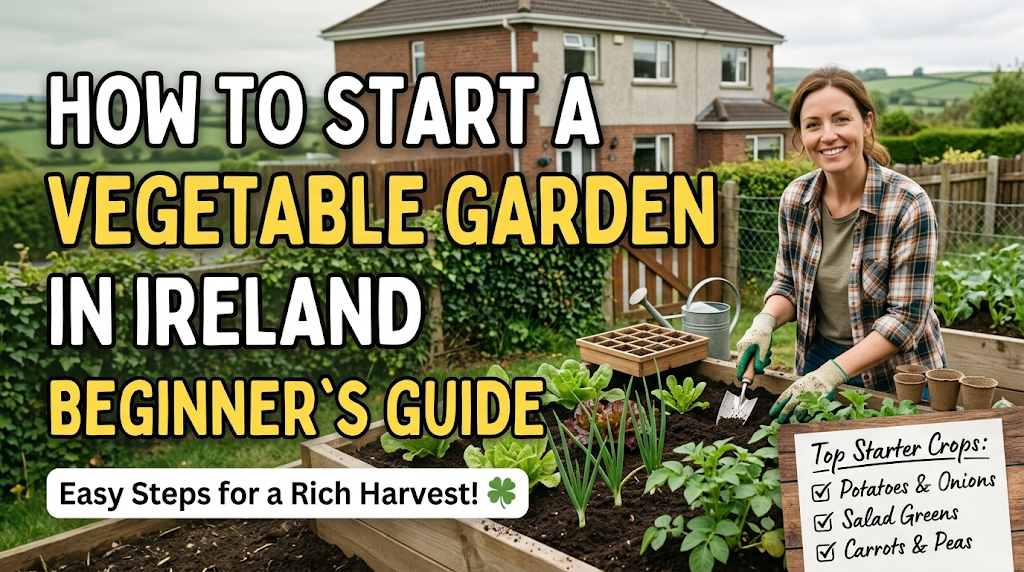
Learning how to start a vegetable garden in Ireland can be easier than many beginners expect. You do not need a large allotment, specialist equipment or years of gardening experience. A small sunny patch, a few containers or a raised bed can provide a useful growing space.
Ireland’s mild climate and regular rainfall can support many vegetables. However, changing weather, cool springs, wet soil and occasional late frosts mean that timing and site selection are important.
The best approach is to start small, choose reliable crops and learn what grows well in your garden. This guide explains how to plan your space, prepare the soil, choose beginner-friendly vegetables and care for your plants through the growing season.
Step 1: Choose the Best Location
Most vegetables need plenty of light to grow well. Before preparing the garden, observe the area for a full day and note when it receives direct sunlight.
Choose a location that offers:
- At least several hours of direct light
- Protection from strong winds
- Easy access to water
- Good drainage
- Convenient access from the house
- Enough room to walk around the beds
- Protection from pets where necessary
Leafy vegetables such as lettuce, spinach and kale can tolerate some partial shade. Fruiting crops such as tomatoes, courgettes and runner beans usually perform better in a brighter position.
Avoid areas where water remains on the soil after rain. Persistent waterlogging can reduce root growth and encourage disease.
Check the direction of the garden
A south-facing area generally receives more sunlight, while north-facing gardens may have longer periods of shade. East-facing spaces receive morning sun, and west-facing areas often receive stronger afternoon light.
Do not assume that the entire garden has the same conditions. A wall, hedge or neighbouring building may create a warm, sheltered microclimate in one section and a cool, shaded area in another.
Step 2: Decide What Type of Garden You Want
You can grow vegetables in several ways. Choose a method that suits your available space, budget and lifestyle.
In-ground vegetable beds
Growing directly in the soil is suitable if you have a garden with reasonably good drainage. It provides plenty of room for root crops and larger vegetables.
Raised beds
Raised beds are useful when:
- The existing soil is compacted or poor
- Drainage needs improvement
- You want clear planting boundaries
- You prefer a more organised layout
- Bending down is uncomfortable
A raised bed does not need to be large. One or two compact beds are often easier for a beginner to maintain than a large area.
Containers
Containers work well for patios, balconies and small gardens. Suitable crops include:
- Lettuce
- Radishes
- Herbs
- Spring onions
- Strawberries
- Dwarf beans
- Tomatoes
- Chilli peppers in a warm, sheltered position
Choose containers with drainage holes and use a suitable growing medium. Place pots where they receive enough light and can be watered easily.
Grow bags
Grow bags can be useful for tomatoes, herbs and other compact crops. They are convenient, but they dry out faster than deep beds and may need regular watering during warm weather.
Step 3: Start With a Manageable Garden Size
A common beginner mistake is planting more than they can maintain. Start with a small area and expand after learning what works.
A simple first garden might include:
- One raised bed
- A few containers
- A small herb area
- One climbing support
- A compost or organic-waste plan
Leave enough space between beds for weeding, watering and harvesting. Narrow beds are often easier to manage because you can reach the centre without stepping on the soil.
Plan before planting
Draw a basic map showing:
- The north-facing side
- Paths
- Beds and containers
- Tall crops
- Climbing supports
- Water access
- Storage for tools
Place tall crops where they will not shade shorter plants. If you are growing peas or beans, use supports along the northern edge of the bed where possible.
Step 4: Prepare the Soil
Healthy soil is one of the most important parts of how to start a vegetable garden in Ireland. Good soil supports root development, drainage and steady plant growth.
Begin with a simple soil check
Look at the soil’s:
- Colour
- Texture
- Drainage
- Worm activity
- Compaction
- Organic-matter content
Clay soil may feel sticky when wet and hard when dry. Sandy soil drains quickly but may need more organic matter. Dark, crumbly soil with visible organic material is usually easier to work with.
Improve the soil gradually
Add suitable organic matter such as:
- Well-rotted garden compost
- Mature homemade compost
- Leaf mould
- Well-rotted manure from a reliable source
- Peat-free soil improver
Avoid digging soil when it is saturated because this can damage its structure. If soil sticks heavily to your boots or tools, wait for a drier period.
Avoid fresh manure
Fresh manure can be too strong for young plants and may contain weed seeds. Use only well-rotted material and follow supplier guidance.
Step 5: Choose Easy Vegetables for Beginners
Start with vegetables that grow reliably and do not require complicated care.
| Vegetable | Why It Suits Beginners |
|---|---|
| Lettuce | Grows quickly and can be harvested gradually |
| Radishes | Mature relatively quickly and need little space |
| Peas | Easy to sow and grow vertically with support |
| Carrots | Suitable for beds and deep containers |
| Potatoes | Productive and straightforward to grow |
| Kale | Hardy and useful for extended harvesting |
| Chard | Colourful, productive and suitable for repeated picking |
| Courgettes | Productive from one or two plants |
| Runner beans | Good use of vertical space |
| Spring onions | Useful in containers and small beds |
| Beetroot | Suitable for beds and containers |
| Herbs | Practical crops for pots and windowsills |
You do not need to grow everything in the first year. Choose three to five vegetables that your household is likely to eat.
Step 6: Understand Irish Planting Times
Planting dates vary with region, weather, soil and whether you are sowing outdoors or growing plants under cover. Use seed packets and local growing advice as your final reference.
The following is a general guide rather than a fixed calendar.
| Period | Possible Gardening Tasks |
|---|---|
| January–February | Plan the garden, order seeds and prepare protected growing areas |
| March | Sow some hardy crops under cover and prepare beds when soil allows |
| April | Sow selected hardy vegetables outdoors and continue planting under cover |
| May | Plant or sow more tender crops after frost risk reduces |
| June | Sow succession crops, support climbers and weed regularly |
| July | Harvest early crops and sow suitable late-season vegetables |
| August | Continue harvesting and prepare autumn crops |
| September | Sow or plant selected winter vegetables and clear finished crops |
| October | Protect soil, add compost and tidy beds |
| November–December | Plan the next season and protect vulnerable crops |
Frost and tender crops
Tomatoes, courgettes, pumpkins, runner beans and some herbs can be damaged by cold temperatures. Raise tender plants indoors or under cover, then harden them off before planting outdoors.
Hardening off means gradually exposing young plants to outdoor conditions over several days. Do not move delicate seedlings directly from a warm windowsill into cold wind.
Step 7: Decide Whether to Grow From Seeds or Plants
Both methods can work well.
Growing from seeds
Seeds are usually economical and offer more variety. They also allow you to grow crops in stages.
Seeds need:
- Suitable compost
- Correct sowing depth
- Adequate moisture
- Sufficient warmth or light
- Protection from slugs, birds and strong weather
Do not sow too many seeds at once. A few small sowings made at intervals can provide a more continuous harvest.
Buying young plants
Young plants are convenient for beginners and useful for crops with a longer growing season. Check that plants are:
- Healthy and upright
- Free from visible pests
- Not severely root-bound
- Appropriate for the current season
- Suitable for outdoor planting
Buying plants can be helpful if you have limited indoor space or a shorter growing period.
Step 8: Learn Basic Sowing Techniques
Always read the seed packet before sowing. It usually provides information about spacing, depth, germination and harvesting.
General sowing steps:
- Prepare a fine, weed-free surface.
- Water the soil if it is very dry.
- Make a shallow drill or hole.
- Sow seeds at the recommended depth.
- Cover them lightly with soil.
- Label the row with the crop and date.
- Keep the area evenly moist.
- Thin seedlings when they become crowded.
Thinning gives seedlings enough room to develop. It may seem wasteful at first, but overcrowded plants often remain small and become more vulnerable to disease.
Step 9: Water Correctly
Ireland’s rainfall does not remove the need for watering. New seedlings, containers and recently planted crops may dry out quickly.
Watering tips include:
- Water the soil around the roots rather than the leaves.
- Water deeply instead of giving frequent light sprinkles.
- Check containers daily during warm weather.
- Water early in the morning or later in the day.
- Use a water butt where practical.
- Add mulch around established plants to reduce moisture loss.
- Avoid walking on wet soil.
Containers usually need more frequent watering than in-ground beds because they have limited soil volume. However, do not leave pots sitting in water unless the plant specifically needs consistently damp conditions.
Step 10: Protect Plants From Slugs and Pests
Slugs and snails can be a problem in many Irish gardens, particularly during damp weather. Young seedlings are especially vulnerable.
Practical protection methods include:
- Check plants regularly
- Remove hiding places near vulnerable crops
- Water in the morning rather than late at night
- Use physical barriers where suitable
- Protect young plants with cloches or collars
- Encourage natural predators
- Avoid overcrowding plants
- Remove damaged leaves
Inspect the underside of leaves for pests such as aphids and caterpillars. A strong spray of water may dislodge some soft-bodied insects, while heavily affected leaves can sometimes be removed.
Use pesticides only when necessary and follow the product label carefully. Keep treatments away from children, pets and edible crops unless the label specifically permits their use.
Step 11: Weed and Mulch Regularly
Weeds compete with vegetables for light, water and nutrients. Removing small weeds regularly is easier than clearing a neglected bed.
Helpful habits include:
- Weed when the soil is slightly moist
- Use a hand fork around shallow-rooted crops
- Remove weeds before they produce seeds
- Keep paths clear
- Add suitable mulch around established plants
- Avoid burying plant stems
Organic mulch can help retain moisture and suppress weeds. Leave a small gap around stems to reduce the risk of rot.
Step 12: Feed Plants When Necessary
Vegetables need nutrients, but more fertiliser is not always better. Excess feeding can produce leafy growth with poor fruit or root development.
Use a suitable fertiliser according to:
- The crop’s requirements
- Soil condition
- Product instructions
- The plant’s growth stage
Leafy crops may benefit from a balanced feed, while fruiting crops may need different nutrient support. Compost improves soil structure and contributes organic matter, but it is not automatically a complete fertiliser.
If plants look unusually pale, stunted or weak, check watering, drainage, light and pests before adding more feed.
Step 13: Provide Support for Climbing Crops
Peas, runner beans and some tomatoes need support as they grow.
Suitable supports include:
- Canes
- Trellis
- Netting
- String
- Obelisks
- Sturdy frames
Install supports before plants become large. This avoids disturbing roots later and makes it easier to guide new growth.
Secure tall supports against wind and make sure small children cannot easily pull them down. Check plants regularly and tie them loosely where necessary.
Step 14: Practise Succession Planting
Succession planting means sowing small quantities of a crop at intervals instead of planting everything at once.
It works particularly well for:
- Lettuce
- Radishes
- Spring onions
- Salad leaves
- Peas
- Beetroot
This approach can prevent a large harvest arriving all at once. It also helps you make better use of empty spaces after early crops are harvested.
Keep notes of sowing dates, harvests and problems. Your own garden records can become more useful than general advice because they reflect your soil and local conditions.
Step 15: Harvest at the Right Time
Harvesting encourages many plants to continue producing.
Examples include:
- Pick lettuce leaves while they are young.
- Harvest peas when the pods are full but tender.
- Pick runner beans regularly.
- Remove courgettes while they are still a manageable size.
- Cut chard leaves from the outside of the plant.
- Lift potatoes when the foliage has died back, according to the variety and growing method.
- Pick herbs regularly but avoid removing too much at once.
Use clean tools when cutting crops. Harvest during cooler parts of the day where practical and store vegetables according to their type.
Common Beginner Mistakes
Planting too much
A large garden can become difficult to water, weed and harvest. Begin with a manageable area.
Ignoring sunlight
Vegetables grown in deep shade may become weak and produce poorly.
Sowing all seeds at once
Succession sowing usually provides a steadier supply.
Planting tender crops too early
Cold soil and late frost can damage young plants. Follow seasonal guidance and protect plants when necessary.
Walking on garden beds
Compacted soil restricts roots and drainage. Use paths or boards to reach crops.
Forgetting to label crops
Labels help you remember varieties, sowing dates and expected harvest times.
Leaving weeds until they become large
Small weeds are faster and easier to remove.
Beginner Vegetable Garden Shopping List
You do not need every gardening tool immediately. Start with:
- Hand trowel
- Garden fork
- Watering can
- Gloves
- Seed labels
- String or twine
- Secateurs
- Compost or soil improver
- Suitable seeds
- Containers or raised-bed materials
- Protective netting or cloches
- Cane supports for climbing plants
Buy tools gradually as your garden develops. Choose durable equipment that feels comfortable to use.
A Simple First-Year Vegetable Plan
A beginner-friendly plan might include:
- One row of lettuce
- One row of radishes
- A short row of carrots
- Peas on a support
- A few kale or chard plants
- One courgette plant
- A container of herbs
- A few seed potatoes in a bag or bed
This gives you a mixture of quick crops, leafy vegetables, climbing plants and a productive summer crop without creating too much work.
Conclusion
Learning how to start a vegetable garden in Ireland is mainly about choosing a suitable site, preparing the soil and starting with crops that match your available time and experience.
Begin with a small bed or a few containers. Grow dependable vegetables such as lettuce, radishes, peas, potatoes, kale, chard and herbs. Pay attention to sunlight, drainage, frost and watering, then record what works in your garden.
Your first season does not need to be perfect. Each harvest will help you understand your soil, weather and planting schedule. With gradual improvements, even a modest Irish garden can become productive and enjoyable.
Frequently Asked Questions
What are the easiest vegetables to grow in Ireland?
Lettuce, radishes, peas, potatoes, kale, chard, spring onions, herbs and courgettes are good options for many beginners. Choose crops according to your garden’s light, soil and available space.
When should I start a vegetable garden in Ireland?
You can begin planning during winter and start sowing some crops under cover in late winter or early spring. Outdoor sowing depends on the crop, local weather, soil condition and frost risk.
Can I grow vegetables in a small garden?
Yes. Use containers, raised beds, vertical supports and compact crops. Lettuce, herbs, radishes, spring onions, peas and dwarf beans are particularly useful for limited spaces.
Do I need a greenhouse?
No. A greenhouse is useful for tender plants and extending the growing season, but many vegetables can be grown outdoors. Containers, windowsills, cloches and simple protective covers can also help.
How much sunlight does a vegetable garden need?
Many vegetables grow best with several hours of direct light each day. Leafy crops can tolerate some shade, while tomatoes, courgettes and climbing beans generally need a brighter position.
How often should I water vegetables?
Watering depends on rainfall, soil, plant size and whether crops are in containers. Check the soil regularly and water deeply around the roots when the surface begins to dry.
How can I protect vegetables from slugs?
Check plants regularly, remove hiding places, protect young seedlings with physical barriers and avoid overcrowding. Encourage natural predators and use approved treatments only when necessary.
Can I grow vegetables without digging?
Yes. You can use raised beds, containers and no-dig methods. Add suitable compost or organic matter to the surface and avoid walking on the growing area.